
[ad_1]
Massive numbers of individuals pouring money into new and lightly controlled assets India Moreover, the pandemic followed the rise of retail investors globally and made many aware of the potential for major losses. Others have been lucky and won while running to buy the first car or apartment.
In Mumbai, 28-year-old Prateek Vora, who works in finance, shied away from the plain vanilla savings deposits that were popular among Indians for generations. Instead, he is investing in equities and cryptocurrencies. A self-taught investor, Vora started with stocks in 2015 and ventured into crypto investing in 2019 to buy a bigger house. After withdrawing from them earlier to evade new taxes in India, he only narrowly escaped the huge drop in cryptocurrencies this year, yet he remained adamant.
 agencies
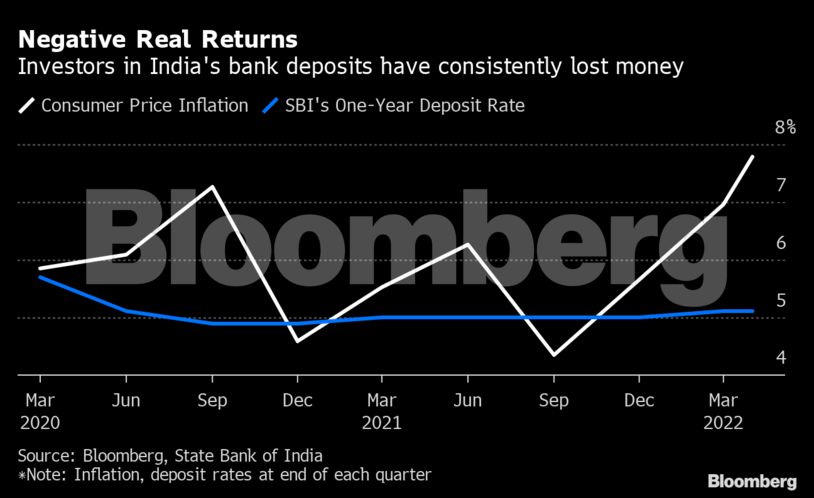
“At this point in time, bank fixed deposits are the worst investment for any individual as inflation adjusted returns are negative,” Vora said. “I had some setbacks, lost money, but these were my lessons. My age allows me to take risks.”
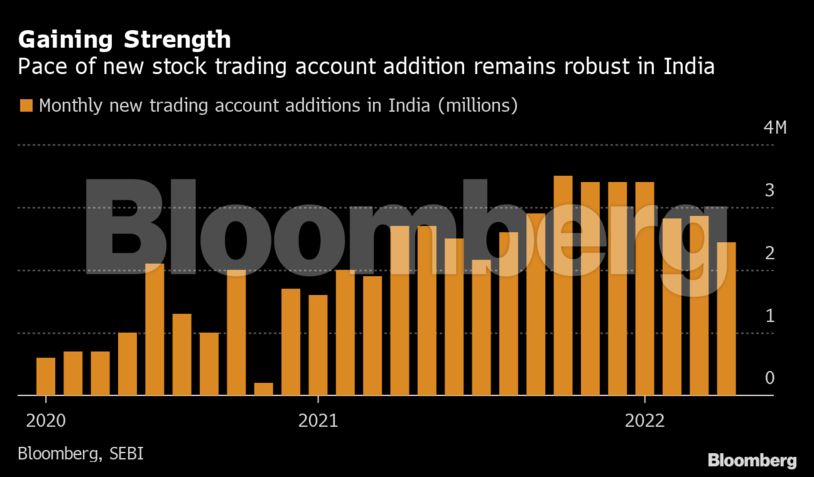
Regulators everywhere are grappling with those risks, but the full scale of change in India is creating new regulatory complexities unique to the prime minister. Narendra Modiof government. Long a country where families stashed their savings in banks, India has added nearly 43 million equity accounts since early 2021, more than the total populations of Belgium, Greece and Portugal.
As inflation exceeds 6%, bank deposits have become increasingly less attractive as the real return on fixed deposits has turned negative. Consumer price growth has risen to the highest level in decades in many countries around the world, with a reading in the US last week that hit a 40-year high in a slate of disturbing data.
The renewed sense of central banks doing more to fight inflation is also making financial markets more volatile, as underlined by a fresh sell-off in the asset class since late last week.
 agencies
Many young Indians who want the opportunity to make big returns are still entering even more volatile territory.
Ekmeet Singh, CEO of peer-to-peer lending platform Lendbox, estimates that Indians are investing around $3 billion annually on new-age alternative investment platforms. Last year a member of the parliamentary panel said he had separately invested $6 billion in crypto assets.
Retail investors have also been drawn to the ease of investments created by dozens of fintech startups that enable investments within minutes, on mobile phones or digital platforms.
India’s new fintech firms promise high returns on products that often involve high risk. Giraffe, an alternative asset platform, is marketing investment products involving invoice discounting that yields 9%-14% for 30-90 days and corporate loans with tenures of 1-3 years that yield 8%-20% , according to his website. Gripp says investors can make up to 21% pretax returns in leases. Bondsindia.com is advertising a return of 275% against fixed deposits.
But with the Reserve Bank of India raising rates and tightening liquidity to tame inflation, there is a growing risk that the assets under these products could come under stress.
Giraffe and other companies say they work hard to protect investors. Lendbox said it uses data and other mechanisms to ensure that the quality of its borrowers is of the highest order and works toward recovery of unpaid loans. Property leasing firm Grip says it takes a hard look at all deals and uses measures such as security deposits to protect customers.
“Indians have limited investment opportunities,” said Sourav Ghosh, co-founder of Giraffe. “We wanted to bring in high-yield fixed-income products that bridge the gap between equity and bank fixed deposits.”
asset leasing
In Mumbai, 27-year-old Anirudh Basak, who works at a Mumbai-based fintech-platform, says he and his family have seen benefits from alternative investments. After a casual conversation with a product manager at another forum called Leaf, Basak invested about Rs 500,000 ($6,404) on the property-lease on his mother’s behalf, which he says now receives monthly interest payments. Used to be.
But crypto remains the big elephant in the room, with exchanges reporting a huge surge in user bases in smaller cities. The central bank has pushed back against the asset, citing financial stability concerns, but the government has yet to decide on its legal status.
Crypto markets have fallen recently as stagflation concerns drag on riskier assets, bitcoin has fallen to its lowest level since December 2020 and other major tokens such as ether are also falling sharply on Monday.
The Reserve Bank of India has set up a department to oversee fintech and is regulating peer-to-peer platforms such as non-banking financial institutions. capital market regulator, Securities and Exchange Board of IndiaThe company is also planning to look into the corporate bond platform.
“Traditional asset classes such as equities, fixed income, real estate, etc., are well covered under the regulatory framework, with adequate investor protection built into their respective governing regulations,” said Srikanth Subramaniam, CEO-designation Kotak Cherry, an investment platform providing a range of products to retail investors. “However, in the case of emerging asset classes such as crypto that have not yet come under the purview of a dedicated securities regulator, there still exists a gap that needs to be addressed by regulation.”
In recent years, the risks of alternative platforms with limited regulatory oversight have been visible elsewhere in the world. China saw a wave of defaults on peer-to-peer lending platforms in 2018, prompting a regulatory crackdown.
Staying anywhere can be difficult for new investors. As a software engineer in New Delhi, Gagandeep Singh said that he made several investments over the years that cost him money, and he lent on a peer-to-peer platform, which made him lose money when some borrowers stopped paying them back. ,
Now working for an information technology company in Canada, Singh, 37, focuses mostly on passive index funds, but doesn’t shy away from risk completely. “I put 5-10% for risky bets,” he said. “That’s the money I play with. It gives me a thrill.”
Singh’s latest obsession is cryptocurrencies, where he invested around $10,000 at the peak, although its value has fallen. “I can lose money,” he said. “It could be zero – or it could make me rich.”
Others are adopting a similar approach. Sunny Amlani, 38, head of marketing at a Mumbai education technology firm, is stuck with a loss of 17% on his crypto investments. A tax regime that does not make it possible to offset losses in crypto with any other income, making it difficult to exit digital currencies.
Still, he’s not completely giving up on Cryo, he said. “I think it’s a good time to be around and definitely going to stop for a while to see where it goes.”
[ad_2]
Source link

