
[ad_1]
While any capex plan that gives value to the company is an investment, a failed capex leads to a sunk cost that is ultimately borne by the company’s shareholders. If a firm catches the bull’s eye by identifying the right opportunity, it can strengthen its prospects, make deeper market penetration, help in moving the return ratio upwards and is favorable for shareholders. Might be possible. However, if the capital expenditure results do not produce the desired results, the scenario could turn out to be quite dire. In fact, such planning, especially when it is in an area where the company does not have core competencies, can even become a distraction and cripple it from making any other investments. Which can get high rewards. Another spillover of such schemes is that they intensify competition and cause FOMO among existing players, which ultimately leads to higher capex than is necessary.
Along with the questions of poor capital allocation, such schemes need more scrutiny, especially when companies resort to debt as a source of funds to fulfill deals and promises. As is evident from one of the past leaders in the wind power sector, if things get difficult, the firm will eventually find itself in trouble deep under a mountain of debt and uncertainties, with the question of future stability. A similar result was seen when in the past a media major entered the infra sector while it was hot and defaulting on credit payments led to massive wealth erosion for investors.
So the important point here is that investors need to be very cautious while investing in such companies. In the long run, very few companies have been able to successfully diversify into unrelated sectors and deliver good returns for their shareholders. As a result, investors should carefully evaluate such schemes, check the debt levels of such companies, and especially at such times invest in efficient companies that are capable of generating high return ratios sustainably.
Technical Outlook
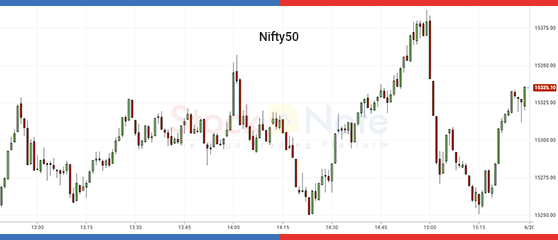
Following weak global cues, Nifty 50 closed this week on a sharply negative note. The index decisively broke below the crucial support level of 15,700 and it means further downside. While the market sentiment is highly bearish, the indices have become oversold in the immediate to short term. Even major global indices are trading on falling channel support. Hence a brief surge in short covering cannot be ruled out. We recommend traders maintain a slight downside to neutral outlook going forward and use any upside as an exit opportunity. Immediate support and resistance are now placed at 15,200 and 16,200 respectively.
 agencies
week’s expectations
Indian indices, coupled with weakness in global peers, are expected to panic as investors worry about skyrocketing inflation. Given the lack of major domestic events and continued dominance of global macros, market participants should monitor the volatility in the dollar index, crude oil prices and the development of the COVID situation in China as well as India. With the S&P 500 as well as our banking index officially in bear market territory, fears will remain high. Therefore, investors are advised to be cautious and make small, selective investments in fundamentally superior companies that are available at reasonable valuations. nifty The 50 ended the week down by 5.61% at 15,293.50.
[ad_2]
Source link
