
Introduction
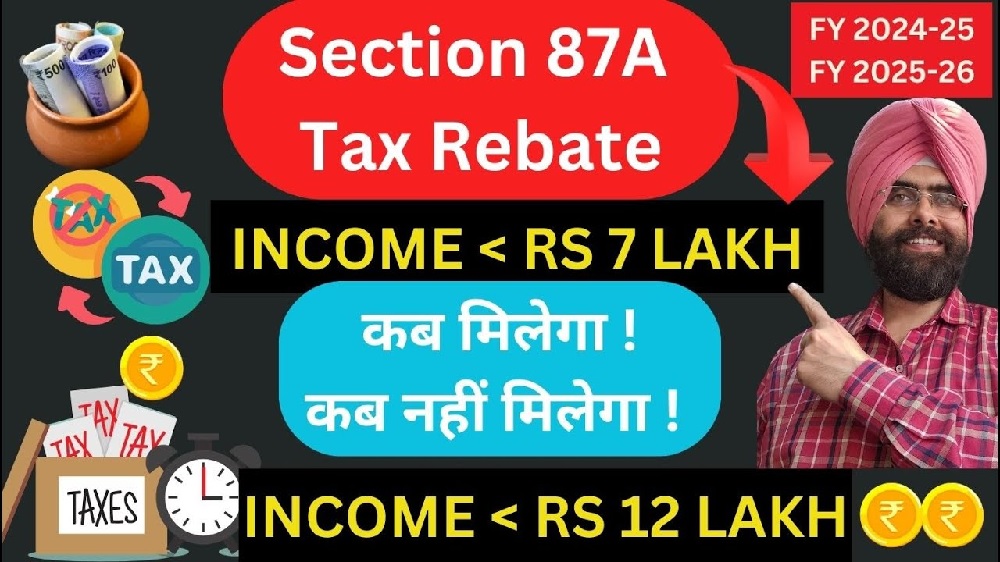
Starting from the financial year 2025-26, the new income tax regime has become the default choice for many salaried employees and pensioners. With wider tax slabs, reduced rates, and a higher rebate limit of ₹12 lakh, this system is designed to feel simpler and more attractive.
But here’s the catch—while the new regime eliminates around 70 deductions and exemptions that were part of the old regime, it still retains some crucial benefits. Think of it like decluttering your home—you let go of extra baggage but keep the essentials that matter the most.
In this article, we will break down all the income tax deductions and exemptions available under the new tax regime for F.Y.2025-26, including corporate NPS contributions, EPF employer contributions, and housing loan interest deductions for let-out properties. Plus, we’ll show you how the Automatic Income Tax Preparation Software All-in-One in Excel with Form 10E makes tax filing effortless.
Table of Contents
| Sr# | Headings |
| 1 | Overview of the New Income Tax Regime 2025-26 |
| 2 | Key Changes and Benefits under the New Regime |
| 3 | Why the Old Regime is Losing Ground |
| 4 | Corporate NPS Contribution Deduction |
| 5 | Employers’ EPF Contribution and Tax Relief |
| 6 | Housing Loan Interest Deduction for Let-Out Properties |
| 7 | Tax-Free Limit on Employer Benefits (₹7.5 Lakh Cap) |
| 8 | Other Available Tax Exemptions |
| 9 | Understanding the Limitations of the New Regime |
| 10 | How Automatic Income Tax Preparation Software Helps |
| 11 | Features of the All-in-One Excel Calculator |
| 12 | Example Scenarios: Old vs New Regime |
| 13 | Steps to Maximise Tax Savings under the New Regime |
| 14 | Importance of Form 10E for Tax Relief |
| 15 | Final Thoughts on Choosing the Right Tax Regime |
1. Overview of the New Income Tax Regime 2025-26
The new tax regime has been fine-tuned in Budget 2025 to encourage more taxpayers to adopt it. With tax rebates available up to ₹12 lakh, many middle-income earners may end up paying little or no tax. The regime simplifies taxation by cutting down deductions but retains selected, high-impact benefits.
2. Key Changes and Benefits under the New Regime
Compared to the old system, the new regime:
- Offers wider slabs → more income falls in lower tax brackets.
- Ensures higher rebate limits → zero tax liability up to ₹12 lakh (subject to conditions).
- Reduces complexity → fewer deductions to track and claim.
This shift makes the new system more user-friendly for individuals who prefer simplicity over paperwork-heavy exemptions.
3. Why the Old Regime is Losing Ground
The old tax regime relied heavily on multiple exemptions—like HRA, standard deduction, and Section 80C investments—to reduce taxable income. While flexible, it demanded detailed documentation and careful planning.
In contrast, the new regime reduces this burden. Imagine choosing between a buffet with hundreds of items (but requiring extra effort to select healthy ones) versus a crated platter with essentials already chosen for you. Most taxpayers prefer the platter—the new regime.
4. Corporate NPS Contribution Deduction
One of the biggest perks still available is employer contributions to the National Pension System (NPS).
- Employers can contribute up to 14% of basic pay plus DA to an employee’s NPS.
- This contribution qualifies as a deduction under Section 80CCD(2).
However, taxpayers must remember that all employer-linked benefits, including EPF and NPS, together cannot exceed the ₹7.5 lakh cap.
5. Employers’ EPF Contribution and Tax Relief
Similar to NPS, employers’ EPF contributions up to 12% of basic salary are also tax-exempt. This is a retained relief under the new regime.
Additionally, benefits like:
- Gratuity payouts
- Leave encashment
- Life insurance maturity proceeds (with conditions)
remain tax-free, provided the aggregate employer contribution does not exceed ₹7.5 lakh annually.
6. Housing Loan Interest Deduction for Let-Out Properties
While self-occupied home loan interest deductions (₹2 lakh under section 24b) are no longer available, the new regime allows deductions for let-out properties.
Here’s how it works:
- Interest paid on loans for rented properties can be deducted from rental income.
- However, under the new regime, negative income from house property can only be set off against income from house property itself.
- This limits the scope compared to the old regime, where such losses could be adjusted against other income sources.
7. Tax-Free Limit on Employer Benefits (₹7.5 Lakh Cap)
The government has capped employer contributions to NPS, EPF, and superannuation funds at ₹7.5 lakh annually.
Anything beyond this threshold is treated as a taxable perquisite in the hands of the employee. This ensures high-income earners don’t accumulate excessive untaxed benefits.
8. Other Available Tax Exemptions
Apart from NPS, EPF, and housing loan interest, some classic exemptions continue:
- Gratuity up to specified limits
- Leave encashment on retirement
- Life insurance payouts (if conditions met)
These provide financial safety nets while keeping tax liability manageable.
9. Understanding the Limitations of the New Regime
The new tax regime simplifies taxation, but it also limits deductions:
- No Section 80C deductions (ELSS, PPF, LIC, etc.)
- No HRA or LTA exemptions
- No deductions on self-occupied property loan interest
This means individuals must rethink financial planning, relying more on tax-friendly employer contributions and fewer personal investment exemptions.
10. How Automatic Income Tax Preparation Software Helps
You may also like:-Download Automatic Income Tax Calculator All in One for the Non-Government Employees with in Excel for the F.Y.2025-26

+This Excel Calculator can prepare at a time your Tax Computed Sheet as per Budget 2025
+ Inbuilt Salary Structure for Non-Govt Employees
+ Automatic Salary Sheet
+ Automatic calculation of H.R.A. Exemption U/s 10(13A
+ Automatic Form 16 Part A and B
+ Automatic Income Tax Form 16 Part B
+ Automatic Income Tax Form 12 BA
It helps taxpayers:
- Compute taxable income instantly.
- Identify eligible deductions and exemptions.
- Generate required forms like Form 10E and Form 16
11. Features of the All-in-One Excel Calculator
The Excel-based calculator is tailored for both government and non-government employees.
Features include:
- Automatic salary structure for both sectors.
- Built-in computation of HRA exemption (Section 10(13A)).
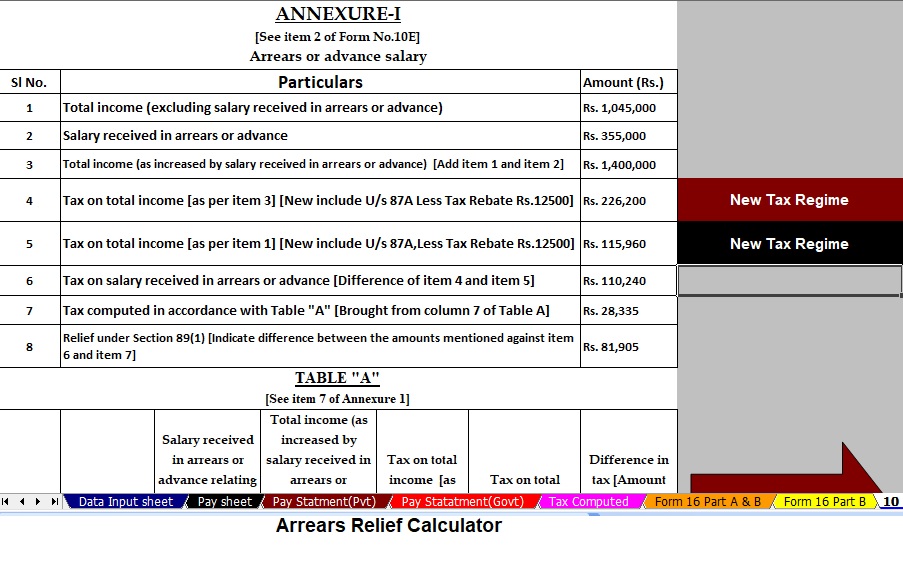
- Income Tax Arrears Relief Calculation under Section 89(1) with Form 10E.
- Automatic preparation of Form 16 (Part A & B).
- Ready-to-use tax computation sheet aligned with Budget 2025.
12. Example Scenarios: Old vs New Regime
Imagine two employees with a ₹12 lakh annual salary:
- Old regime taxpayer: Needs to invest in PPF, ELSS, and claim HRA to reduce taxable income.
- New regime taxpayer: Automatically pays little to no tax due to the higher rebate limit—no extra investments required.
This shows how the new system favours simplicity over strategy.
13. Steps to Maximise Tax Savings under the New Regime
To make the most of the new regime:
- Opt for corporate NPS contributions.
- Ensure your employer contributes adequately to EPF.
- If you own rental property, claim interest deductions
- Keep track of the ₹7.5 lakh cap on employer benefits.
14. Importance of Form 10E for Tax Relief
Form 10E plays a vital role in claiming tax relief under Section 89(1), particularly for arrears or advance salary payments.
The Automatic Excel tool generates Form 10E seamlessly, saving employees from confusion and ensuring compliance.
15. Final Thoughts on Choosing the Right Tax Regime
Choosing between the old and new regimes is like choosing between a detailed map and GPS navigation. The old one requires effort and planning, while the new one guides you smoothly with fewer complications.
For most salaried individuals and pensioners in F.Y.2025-26, the new tax regime with retained deductions and exemptions offers the most practical route. And with the Automatic Income Tax Preparation Software, managing taxes is no longer a headache—it’s just a few clicks away.
FAQs
- What are the key deductions available under the new tax regime for F.Y.2025-26?
Corporate NPS contributions, employers’ EPF contributions, and housing loan interest for let-out properties are the main deductions. - Can I claim Section 80C deductions under the new regime?
No, Section 80C deductions like PPF, LIC, and ELSS are not available under the new regime. - Is home loan interest deductible under the new tax regime?
Yes, but only for let-out properties, not self-occupied ones. - Why is Form 10E important for salaried employees?
Form 10E is required to claim tax relief under Section 89(1) for arrears or advance salary. - How does the Automatic Income Tax Preparation Software help?
It simplifies tax computation, automates Form 10E and Form 16 preparation, and ensures accuracy in filing for both government and non-government employees.
Download Automatic Income Tax Calculator All in One for the Government and Non-Government Employees with Form 10E in Excel for the F.Y.2025-26


Features of this Excel Utility are:-
+This Excel Calculator can prepare at a time your Tax Computed Sheet as per Budget 2025
+ Inbuilt Salary Structure for both Govt and Non-Govt Employees
+ Automatic Salary Sheet
+ Automatic calculation of H.R.A. Exemption U/s 10(13A
+ Automatic calculate Income Tax Arrears Relief Calculation U/s 89(1) with Form 10E
+ Automatic Form 16 Part A and B
+ Automatic Income Tax Form 16 Part B

