
[ad_1]
Just as movie theaters are full of sequels (Top Gun, Jurassic Park and Thor), the state capital is also reeling from last year’s big hit: tax cuts.
So far this year, 27 states and the District of Columbia have taken significant tax cuts. last year’s total was 29 states and the District of Columbia, Like any good sequel, our favorite characters (income tax rate cut, refundable tax credit and tax exemption) are back, but with a few new plot twists (relief from taxes on groceries and gas).
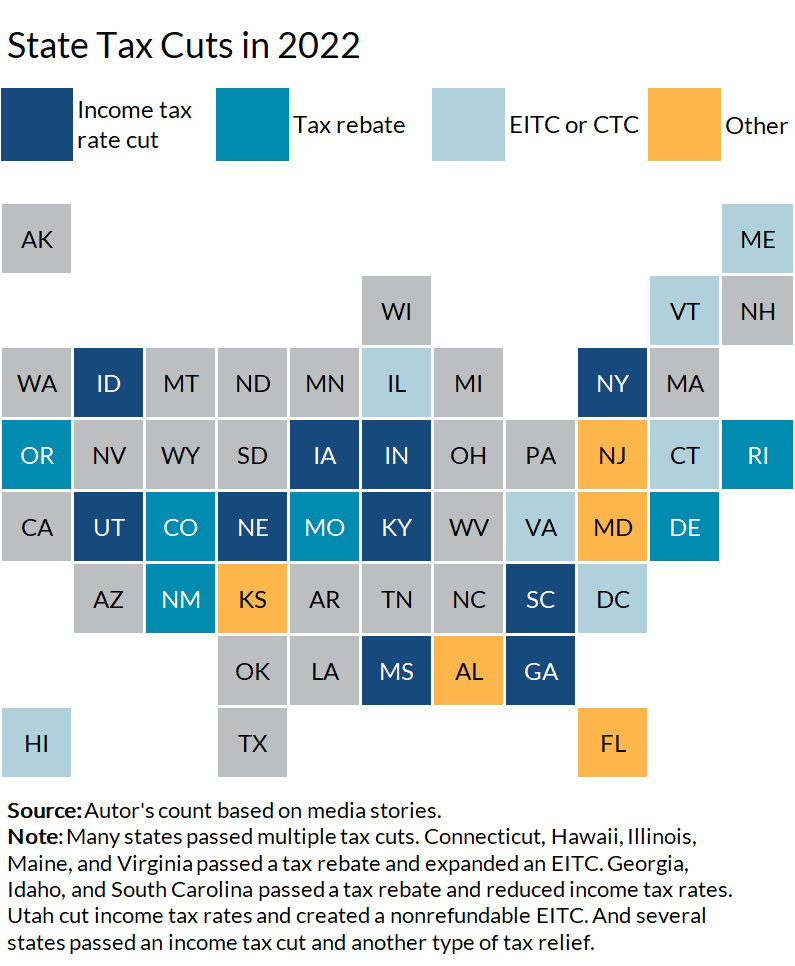
In both years, the scene was set by unexpectedly strong tax collections, resulting in a Combination Unprecedented federal pandemic spending and economic growth.
However, unlike Hollywood screenwriters, state legislators can’t just write happy endings. In fact, some took drastic tax cuts as economic and geopolitical challenges intensified. The ongoing pandemic, high inflation, rising interest rates and the war in Ukraine can all slow the economy and put pressure on the state budget.
So here’s a quick look at what tax cuts were passed in 2022 and why some states may have made a budget cliffhanger.
personal income tax rate cut
Ten states cut income tax rates this year. This is one more than in 2021. Idaho and Iowa both lowered income tax rates in years.
Although details vary, the big winners of cutting state income tax rates are generally those with higher incomes. For example, we cut Arizona and Ohio income tax rates for 2021 Tax Policy Center State Income Tax Model And found that households earning more than $100,000 received 93 percent of Arizona’s deductions and 73 percent of Ohio’s.
refundable tax credit
Six states and the District of Columbia created or expanded a major refundable tax credit in 2022.
majority of state earned income tax credit (EITC) is calculated as a percentage of the federal credit, so Connecticut, Illinois and Maine simply increased their match rates. other states Qualified more filers for EITC or made their credit refundable. Tax Policy Center of 2021 State Tax Deduction Analysis Similar EITC expansions in Maryland and New Mexico sent almost all tax relief to households earning less than $30,000.
During this, Vermont Created a $1,000 refundable child tax credit (CTC) for families with children under the age of six. It became the sixth state to offer CTC and the third state to offer refundable CTC.
Several states also expanded the non-refundable income tax deduction — specifically to retirement income.
lump sum tax exemption
In 2022, families of 14 states will get one more government check. But this time it will come from the governors instead of the US Treasury. Only three states sent exemptions in 2021.
In most of these states, every resident who has filed a tax return in the past year or two will get paid. A handful would limit payments to low- or middle-income households.
Although, Missouri And South Carolina Can send exemptions only to residents with tax liability, which would exclude many low-income families and senior citizens. Leaders of both the states have agreed to the exemption but have not yet enacted a final law.
Grocery and gas tax relief and everything else
While most states cut income tax only in 2021, rising prices prompted some states to reduce grocery and gas taxes this year.
Kansas and Virginia put their end state grocery tax While Illinois suspended its taxes for the fiscal year. At the pump, Connecticut, Florida, Georgia, Maryland and New York all temporarily suspended their gas taxWhile Illinois and Kentucky halted hikes in scheduled gas tax rates.
Many states also cut the property tax or business tax.
Episode III: Revenge of Tax Cuts?
Distributing a tax exemption when consumer demand is rising may not make much economic sense, but that type of tax cut affects only one budget year. And even a relatively large EITC expansion carries a modest price tag. Rising Connecticut’s match The cost of the federal debt ranges from 30.5 percent to 41.5 percent at $49 million.
But the annual cost of cutting 2022 income tax rates was massive: $525 million Mississippi$1.2 billion inches Georgia$2 billion inches Iowa, Some cuts will be phased out over several years, and some depend on the state hitting revenue. triggers.
But the budget math for states is that if the economy weakens and strong revenue growth doesn’t continue, then the cut in income tax rates could quickly go awry. And Forecast The fiscal year 2023 showed essentially no revenue growth. Also, be aware that many of these states have majority rule Which make tax increases far more difficult than deductions.
Maybe these tax-cutting states will find the end of Hollywood. But horror is also a genre of state budget debate that lends itself to sequels.
[ad_2]
Source link

