
To calculate Income Tax Arrears Relief under Section 89(1) for the Financial Year (FY) 2025-26, you must file Form 10E online through the Income Tax Department’s e-filing portal before submitting your Income Tax Return (ITR). This process ensures that you are not unfairly taxed at a higher rate in the current year just because you received a lump sum payment that actually pertains to previous financial years. Step-by-Step Calculation Process The relief amount represents the difference between: the additional tax you pay in the current year due to arrears, and…
Year: 2025
Salary Arrears Relief Calculator U/s 89(1) with Form 10E from FY 2000-01 to FY 2025-26 [Updated Version]
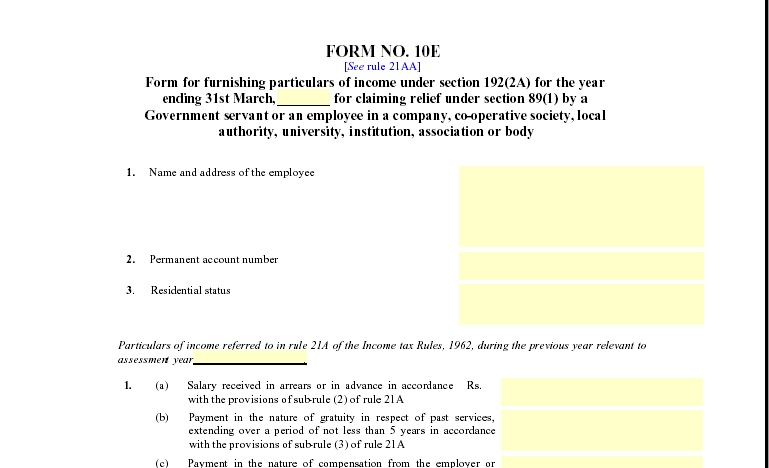
If you have ever received an unpaid salary from older years, you might have felt confused about why your tax suddenly shot up. Although arrears usually bring relief, they sometimes push you into a higher tax slab. Fortunately, Section 89(1) and Income Tax Form 10E let you claim relief, so you don’t end up paying extra tax unfairly. In this friendly, updated guide, we will walk through the Salary Arrears Relief Calculator U/s 89(1) for FY 2000-01 to FY 2025-26, ensuring you understand how everything works—clearly, smoothly, and confidently. Just…
Section 80TTA of the Income Tax Act: Eligibility, Limit, and Complete Benefits Explained
For the Financial Year (F.Y.) 2025-26, Section 80TTA of the Income Tax Act provides a deduction of up to ₹10,000 on the interest income earned from savings accounts. This deduction is available to individuals and Hindu Undivided Families (HUFs) who choose the old tax regime. Key provisions under Section 80TTA for F.Y. 2025-26 Eligibility The deduction can be claimed by the following taxpayers: Individuals: This applies to residents and non-residents, as long as they are not senior citizens (60 years or older). Senior citizens have a separate provision, Section 80TTB, with…
Income Tax Deduction Chapter 6A with Automatic Income Tax Preparation Software/Calculator for the Salaried Persons for the F.Y.2025-26

Do you ever wonder how to reduce your Income Tax burden while staying compliant with the law? For most salaried individuals, understanding tax deductions under Chapter 6A can feel like decoding a complex puzzle. However, with modern tools like Automatic Income Tax Preparation Software/Calculator, the entire process becomes as easy as clicking a button. Think of Chapter 6A as your financial umbrella—it shields your income from excess tax by allowing specific deductions. In this article, we’ll explore these deductions in depth, understand how they work, and see how technology can…
Pay Zero Income Tax on Capital Gains: Save Tax by Reinvesting up to ₹10 Crore LTCG
Paying zero tax on capital gains may sound impossible, but under the Income Tax Act, Section 54, you can save tax on long-term capital gains (LTCG) by reinvesting the proceeds wisely. The government allows you to reinvest up to ₹10 crore from the sale of a residential property into another property and claim a full exemption from LTCG tax. Let’s explore how you can use this powerful provision to legally reduce your tax to zero. Understanding Long-Term Capital Gains (LTCG) Whenever you sell a capital asset like a house, land,…
Four Critical Changes in Income Tax Act: Standard Deduction, UPS, Income Tax Search, and Other Changes to be Applicable in FY 2025-26
Introduction The Public Investment Fund (PIF) and its wholly owned subsidiaries, moreover, will now be explicitly named in the exemption section, thereby ensuring legal certainty and simultaneously encouraging long-term global investment. Consequently, this clarification not only boosts investor confidence but also guarantees smoother regulatory interpretation for future projects. Impact As a result, this reform will significantly increase foreign capital inflows, while it will also strengthen India’s infrastructure. Furthermore, it will align seamlessly with the government’s ambitious “Make in India” initiative as well as its “Viksit Bharat 2047” vision, thereby reinforcing…
Old Regime vs New Regime 2025: Which Tax Regime is Better for You?

Introduction The Union Budget 2025 completely reshaped India’s personal income tax landscape. Naturally, taxpayers across the country are wondering: “Should I continue with the old tax regime or switch to the new one?” This question is more important than ever because both the Old and New Tax Regimes offer distinct advantages. Choosing wisely can help you save thousands in taxes and simplify your financial life. In this comprehensive guide, you’ll discover the latest tax slab rates, key benefits, and expert comparisons between the Old Regime vs New Regime…
Section 115BAC of the Income Tax Act Introduces a Simplified Tax Regime for FY 2025-26| With Automated Income Tax Arrears Relief Calculator U/s 89(1) with Form 10E for the FY 2025-26
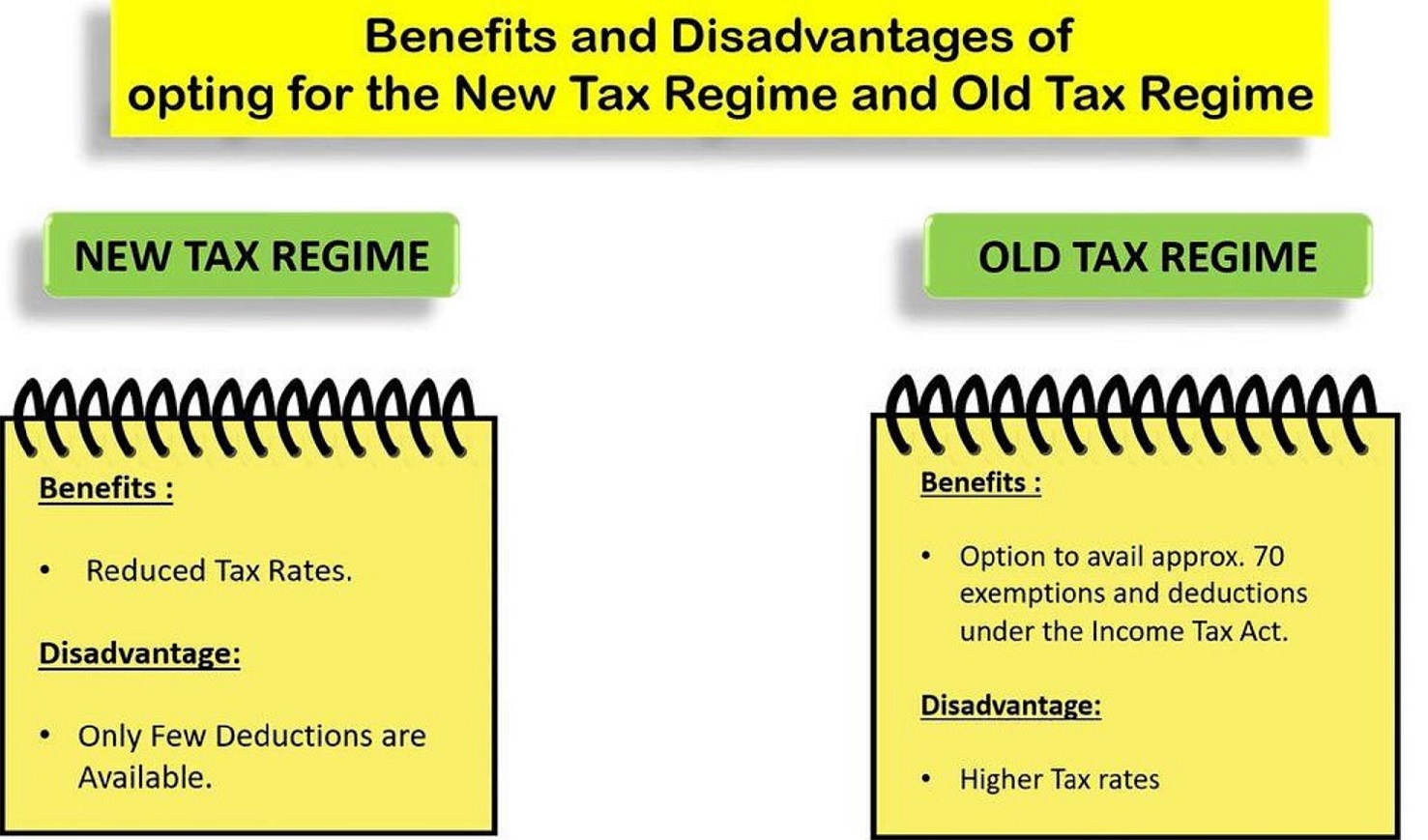
Section 115BAC of the Income Tax Act introduces an alternative, simplified “new tax regime“ for individuals, Hindu Undivided Families (HUFs), and other specified entities. This regime offers lower income tax rates across different income slabs in exchange for foregoing most of the common exemptions and deductions available under the traditional “old tax regime”. Key Features of Section 115BAC Applicability: It applies to individuals, HUFs, Association of Persons (AOPs), Body of Individuals (BOIs), and Artificial Juridical Persons (AJPs). Default Regime: From the Financial Year 2023-24 (Assessment Year 2024-25) onwards, the new tax regime is the…
Salary Arrears Relief Calculator U/s 89(1) with Form 10E from the FY 2000-01 to FY 2025-26
Have you ever received your salary arrears and felt confused about the high tax deduction? You’re not alone! Many salaried employees face this issue every year when arrears are paid for previous financial years. Thankfully, the Income Tax Act’s Section 89(1) provides a simple solution — and with Form 10E, you can claim tax relief smartly and legally. Think of it as a “time machine for taxes” — you can adjust the extra tax you pay today for income that belonged to the past. Let’s dive deep into understanding how…
Why Choose the New Tax Regime as per Budget 2025 with Automated Income Tax Preparation Software All in One in Excel for the Non-Government Employees FY2025-26
The Union Budget 2025 introduced significant reforms to simplify the Indian taxation system, particularly through the New Tax Regime. For non-government employees, this new structure offers a straightforward and transparent approach to managing taxes. When combined with an Automated Income Tax Preparation Software All-in-One in Excel, the benefits multiply, saving both time and money. Let’s explore why choosing the New Tax Regime for FY 2025-26 is a smart decision and how automation enhances your tax management experience. Understanding the New Tax Regime for FY 2025–26 The Government introduced the New…